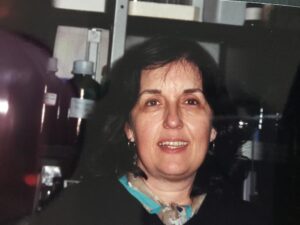

In an online lecture, Dirk-Jan Scheffers of the University of Groningen in the Netherlands discussed the growth and cell division of Xanthomonas citri.
On October 8, approximately 60 people attended the lecture “Divisome and Elongasome Localization in Xanthomonas citri,” organized by the Center for Research in Biology of Bacteria and Bacteriophages (CEPID B3) and delivered by Dirk-Jan Scheffers of the University of Groningen in the Netherlands. The online seminar explored the mechanisms involved in the growth, cell division, and cell wall synthesis of Xanthomonas citri, a bacterium that attacks citrus leaves, stems, branches, and fruit, causing citrus canker, one of the major challenges facing citrus orchards worldwide.
During his presentation, Scheffers explained how structures and proteins involved in cell division and growth are organized in X. citri. His research, conducted in collaboration with Brazilian researchers, includes studies of the divisome and elongasome, protein complexes that coordinate cell wall construction during bacterial division and growth. Among the findings presented were observations on the roles of MinC, a protein involved in positioning the site of cell division, and MreB, which is associated with cell growth and the maintenance of cell shape.
Scheffers’s research also addresses a practical challenge: developing alternatives for controlling citrus canker. The speaker presented studies investigating gallic acid derivatives for their activity against the bacterium and their behavior in the environment. Part of this work is being conducted in collaboration with Henrique Ferreira of CEPID B3 and other citrus researchers. The experiments include tests to determine how these compounds behave in soil and whether they are degraded by microorganisms.
Copper-based compounds are currently used to control citrus canker. According to Scheffers, however, the continued use of these products can lead to soil and water contamination and promote the development of bacterial resistance. For this reason, the team is investigating whether gallic acid derivatives could offer a more suitable and sustainable alternative for disease control. “What we are really trying to do is combat citrus canker in the field,” Scheffers concluded.